Ingredients
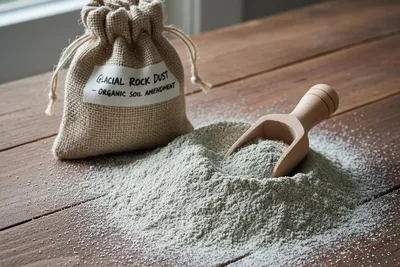
Dolomite lime is a sedimentary rock composed of calcium-magnesium carbonate — CaMg(CO₃)₂ — that delivers two essential minerals in a single pH-correcting amendment. While standard calcitic lime provides only calcium, dolomite lime addresses both calcium and magnesium deficiency simultaneously, making it the preferred liming agent for soils that are both acidic and magnesium-depleted.
Dolomite forms when calcium-rich limestone is exposed to magnesium-bearing groundwater over geological time — the magnesium gradually replaces half the calcium in the crystal lattice, creating the characteristic CaMg(CO₃)₂ chemistry. Agricultural dolomite is mined, crushed, and screened to particle sizes ranging from powder (200-mesh) to pellets, with finer particles dissolving faster.
Organic growers in the Pacific Northwest choose dolomite lime because regional soils are often both acidic (pH 5.0-5.5 from high rainfall leaching) and magnesium-deficient (magnesium is highly mobile and leaches readily in wet climates). Dolomite addresses both problems with one material — correcting pH through carbonate neutralization while replenishing leached magnesium.
Dolomite lime contains approximately 22% calcium (Ca) and 12% magnesium (Mg), with a calcium-to-magnesium ratio near 2:1. The carbonate fraction (CO₃²⁻) reacts with soil hydrogen ions (H⁺) to produce water and carbon dioxide, reducing acidity and raising pH.
The calcium-to-magnesium ratio is a critical soil health metric. A Ca:Mg ratio of 3:1 to 5:1 is considered optimal for most crops — high enough for adequate calcium but not so high that magnesium becomes competitively excluded from root uptake. Dolomite lime’s 2:1 ratio provides a strong magnesium boost. In soils that already have adequate magnesium, calcitic lime (pure calcium carbonate) is preferred to avoid pushing the Ca:Mg ratio below 3:1.
Daley Organics uses three calcium-bearing amendments in the fertilizer blend, each with different pH behavior:
Dolomite lime raises pH through carbonate neutralization, providing both calcium and magnesium. It takes 2-6 weeks for significant pH change with ground dolomite, faster for powdered.
Oyster shell raises pH through the same carbonate mechanism but much slower (months to years), providing calcium only (no magnesium).
Gypsum provides calcium and sulfur but does NOT change soil pH — the sulfate ion is pH-neutral, making gypsum the calcium source of choice when pH is already correct but calcium is needed.
Dolomite lime is a component of the pH management and mineral fraction in our 25-ingredient fertilizer blend, present in all Daley Organics soil products. Its role is to balance the naturally acidic pH of peat moss (pH 3.5-4.5) and coco coir (pH 5.8-6.8 after buffering) in our base media, bringing the final mix into the optimal 6.0-6.8 range for most vegetable and flower crops.
At our Grants Pass soil yard, we calibrate the dolomite lime rate to achieve a target mix pH of 6.2-6.5 — accounting for the acidifying effect of sulfur-containing amendments (K-Mag, gypsum) and the alkalinizing effect of oyster shell and dolomite working together.
For pH correction, apply 5-10 lbs per 100 square feet for mildly acidic soils (pH 5.5-6.0) or 10-20 lbs for strongly acidic soils (below pH 5.0). Incorporate into the top 6-8 inches and test pH after 4-6 weeks. For maintenance in established beds, apply 5 lbs per 100 square feet annually in fall to replace calcium and magnesium leached by winter rains.
Do not apply dolomite lime to soils that already test above pH 6.8 or to soils with excessive magnesium levels — always soil test before liming to determine whether calcitic lime, dolomite lime, or gypsum is the correct calcium source for your specific situation.
Common Questions
Dolomite lime (CaMg(CO₃)₂) provides both calcium (22%) and magnesium (12%) while raising pH. Standard calcitic garden lime (CaCO₃) provides only calcium with no magnesium. Choose dolomite for acidic, magnesium-depleted soils; calcitic lime for acidic soils with adequate magnesium.
Ground dolomite lime produces significant pH change in 2-6 weeks when incorporated into moist soil. Powdered dolomite acts faster (1-2 weeks). Pelletized dolomite acts slower (4-8 weeks) because the pellets must dissolve before the carbonate reacts.
A Ca:Mg ratio of 3:1 to 5:1 is optimal for most crops. Dolomite lime's 2:1 ratio provides a strong magnesium boost — beneficial for magnesium-depleted Pacific Northwest soils. If soil already has adequate magnesium, use calcitic lime to avoid pushing the ratio below 3:1.
Generally no. Blueberries prefer acidic soil (pH 4.5-5.5) and dolomite lime raises pH. If blueberry soil needs calcium or magnesium without pH change, use gypsum (calcium without pH change) and Epsom salt (magnesium without pH change) instead of dolomite lime.
Used In Our Blends
Want the full science behind every ingredient?
Our ingredient library covers all 26 amendments with full descriptions and product cross-references.
Keep Reading