Ingredients
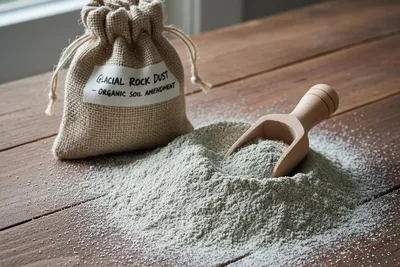
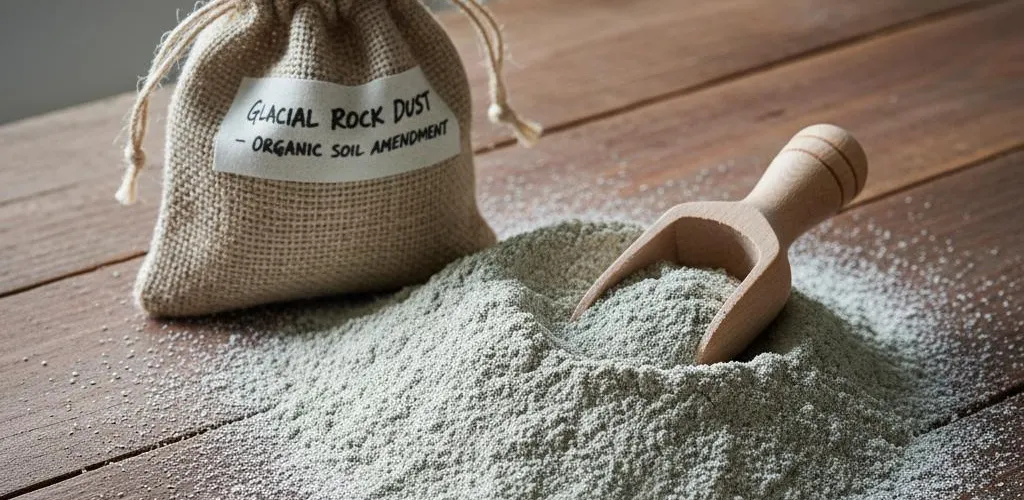
K-Mag — commercially sold as Sul-Po-Mag or langbeinite — is a naturally occurring evaporite mineral (K₂SO₄·2MgSO₄) that delivers three essential plant nutrients from a single rock: 22% potassium (K₂O), 11% magnesium (Mg), and 22% sulfur (S). No other single-source organic amendment provides all three.
Langbeinite formed 250 million years ago during the Permian Period when inland seas in what is now southeastern New Mexico evaporated, concentrating dissolved minerals into crystalline salt deposits buried thousands of feet underground. The mineral is mined from the Carlsbad Potash District, where it’s extracted, washed, and screened for agricultural use without any chemical processing — making it one of the few mined fertilizer ingredients approved for certified organic production.
Organic growers choose K-Mag over muriate of potash (KCl) for one critical reason: K-Mag is chloride-free. Chloride is toxic to soil microbes at elevated concentrations and burns sensitive crops like blueberries, strawberries, tobacco, and potatoes. By delivering potassium as sulfate rather than chloride, K-Mag provides the same essential nutrient without the biological damage.
K-Mag’s triple-nutrient profile addresses three common deficiencies in a single application:
Potassium (22% K₂O) regulates water uptake, enzyme activation, and sugar transport in plants. Potassium-deficient crops show leaf edge browning, weak stems, and poor fruit quality.
Magnesium (11% Mg) is the central atom in chlorophyll — without adequate magnesium, photosynthesis literally cannot occur. Deficiency appears as interveinal yellowing (chlorosis) starting on older leaves.
Sulfur (22% S) is required for amino acid synthesis (cysteine and methionine), protein formation, and the production of glucosinolates (the compounds that give brassicas their pungent flavor and pest resistance). Sulfur deficiency looks similar to nitrogen deficiency — uniform yellowing of new growth.
Daley Organics uses three potassium sources in the 25-ingredient fertilizer blend:
Kelp meal delivers fast-acting potassium (water-soluble, available within days) along with growth hormones and 60+ trace minerals. K-Mag delivers medium-speed potassium (the sulfate dissolves in 2-6 weeks) plus magnesium and sulfur. Greensand delivers the slowest potassium (glauconite crystal dissolution over 2-3 years) plus iron and trace minerals.
This three-tier system ensures potassium availability from the first week of planting through the second and third growing seasons — no synthetic time-release coating required.
K-Mag is a component of the potassium, magnesium, and sulfur fractions in our 25-ingredient fertilizer blend, present in all Daley Organics soil products. Its medium-speed release fills the critical gap between fast-acting kelp meal and slow-acting greensand, while simultaneously delivering the magnesium and sulfur that the other potassium sources lack.
At our Grants Pass soil yard on Monument Drive, we use granular K-Mag screened to a uniform particle size for consistent distribution during blending.
For general application, broadcast 2-4 lbs per 100 square feet and incorporate into the top 4-6 inches before planting. For potassium-hungry crops like tomatoes and potatoes, increase to 4-6 lbs per 100 square feet. For side-dressing during the growing season, apply 1-2 lbs per 100 square feet every 6-8 weeks.
K-Mag dissolves relatively quickly in moist soil, so its nutrients are available within 2-6 weeks of application. For container growing, mix 1 tablespoon per gallon of potting mix at planting. K-Mag has a moderate salt index — while safer than muriate of potash, very heavy applications in dry soil can temporarily increase electrical conductivity. Water thoroughly after application in arid conditions.
Common Questions
K-Mag (langbeinite) delivers 22% potassium (K₂O), 11% magnesium (Mg), and 22% sulfur (S) from a single naturally occurring mineral. No other single-source organic amendment provides all three essential nutrients.
Yes. K-Mag delivers potassium as sulfate (K₂SO₄·2MgSO₄), not chloride. This makes it safe for chloride-sensitive crops like blueberries, strawberries, and potatoes, and prevents the soil microbial damage caused by elevated chloride concentrations from muriate of potash.
Langbeinite is mined from 250-million-year-old Permian evaporite deposits in the Carlsbad Potash District of southeastern New Mexico. It's extracted, washed, and screened without chemical processing, making it approved for certified organic production.
K-Mag's sulfate matrix dissolves in 2-6 weeks in moist soil, delivering potassium, magnesium, and sulfur at a medium speed. This fills the gap between fast-acting kelp meal (available in days) and slow-acting greensand (available over 2-3 years) in the Daley Organics blend.
Used In Our Blends
Want the full science behind every ingredient?
Our ingredient library covers all 26 amendments with full descriptions and product cross-references.