Ingredients
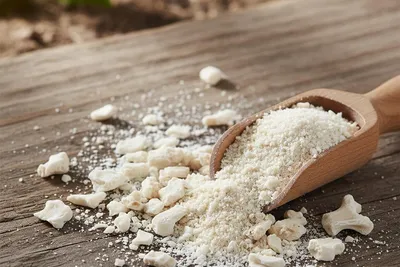
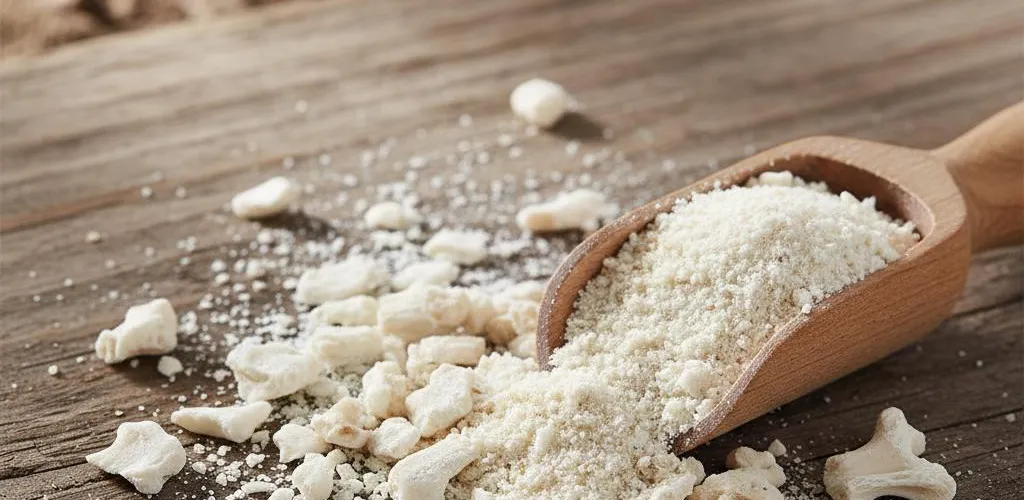
Fish bone meal is the processed skeletal material of ocean fish — primarily salmon, cod, and pollock from Pacific Northwest and North Atlantic fisheries. While standard bone meal comes from land animals, fish bone meal offers a distinct phosphorus delivery profile that complements terrestrial sources in a complete organic fertilizer blend.
Fish bone meal is produced by steam-cooking fish carcasses at processing plants, separating the skeletal material from flesh and oils, then grinding the bones into a fine meal. The typical NPK analysis is 4-12-0, with 12-16% available phosphorus (P₂O₅) and 18-24% calcium — a profile that makes it one of the most concentrated natural phosphorus sources available to organic growers.
The critical difference from land-animal bone meal is particle size and mineral structure. Fish bones are thinner, more porous, and less calcified than mammalian bones, which means they break down faster in soil — typically 2-4 months versus 4-12 months for standard bone meal. This creates a phosphorus release window that bridges the gap between fast-acting bat guano (days to weeks) and slow-acting land-animal bone meal (months to a year).
Fish bone meal delivers three primary nutrients. Phosphorus (P₂O₅) at 12-16% drives root cell division, energy transfer (ATP), and flower/fruit initiation. Calcium at 18-24% strengthens cell walls, prevents blossom end rot in tomatoes and peppers, and buffers soil pH. Nitrogen at 3-5% provides a modest supplemental nitrogen contribution from residual fish protein on the bone surfaces.
The phosphorus in fish bone meal exists primarily as hydroxyapatite — a crystalline calcium-phosphate mineral that dissolves gradually as soil acids (produced by root exudates and microbial metabolism) solubilize the mineral surface. This means phosphorus availability increases as root activity increases — a self-regulating delivery mechanism.
Standard bone meal (from cattle and other land mammals) typically analyzes at 3-15-0 with slower availability due to the denser, more calcified structure of mammalian bones. Fish bone meal delivers comparable phosphorus concentration (4-12-0) but from a more porous matrix that decomposes 2-3 times faster.
Daley Organics includes both fish bone meal and standard bone meal in the 25-ingredient fertilizer blend to create overlapping phosphorus release curves — fish bone meal releases during months 1-4, while land-animal bone meal continues releasing through months 4-12.
Fish bone meal is a component of the phosphorus fraction in our 25-ingredient fertilizer blend, appearing in Daley’s Mix ($140/yd), Premium Soil Mix ($130/yd), and Bloom Blend 2-7-7. It works alongside bat guano (fastest phosphorus), standard bone meal (slowest phosphorus), and sea bird guano to create a layered phosphorus availability curve spanning the entire growing season.
At our Grants Pass soil yard on Monument Drive, we source fish bone meal from Pacific Northwest fish processing operations — a sustainable byproduct that converts fishery waste into valuable plant nutrition.
For new garden beds, incorporate 3-5 lbs per 100 square feet into the top 6-8 inches of soil before planting. For established perennials, top-dress 2-3 lbs per 100 square feet in early spring as roots become active. For container growing, mix 1-2 tablespoons per gallon of potting mix.
Fish bone meal works best in slightly acidic to neutral soils (pH 6.0-7.0). In alkaline soils above pH 7.5, phosphorus availability decreases significantly because hydroxyapatite is less soluble at high pH. If your soil tests alkaline, incorporate elemental sulfur or peat moss to lower pH before relying on bone-based phosphorus sources.
Common Questions
Fish bone meal typically analyzes at 4-12-0 NPK, with 12-16% available phosphorus (P₂O₅) and 18-24% calcium. This makes it one of the most concentrated natural phosphorus sources approved for organic production.
Fish bones are thinner, more porous, and less calcified than mammalian bones, so fish bone meal breaks down in 2-4 months versus 4-12 months for standard bone meal. Daley Organics uses both for overlapping phosphorus release — fish bone meal for months 1-4, land-animal bone meal for months 4-12.
Apply fish bone meal at planting time or in early spring for established perennials. Incorporate 3-5 lbs per 100 square feet into the top 6-8 inches of soil. For containers, mix 1-2 tablespoons per gallon of potting mix.
Fish bone meal phosphorus becomes less available in alkaline soils above pH 7.5 because the hydroxyapatite mineral is less soluble at high pH. Lower soil pH with elemental sulfur or peat moss before relying on bone-based phosphorus in alkaline conditions.
Want the full science behind every ingredient?
Our ingredient library covers all 26 amendments with full descriptions and product cross-references.