Ingredients
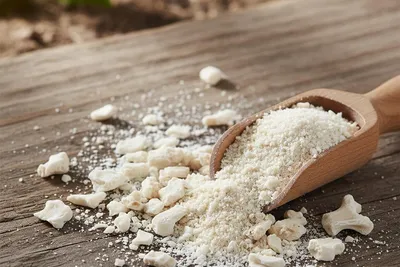
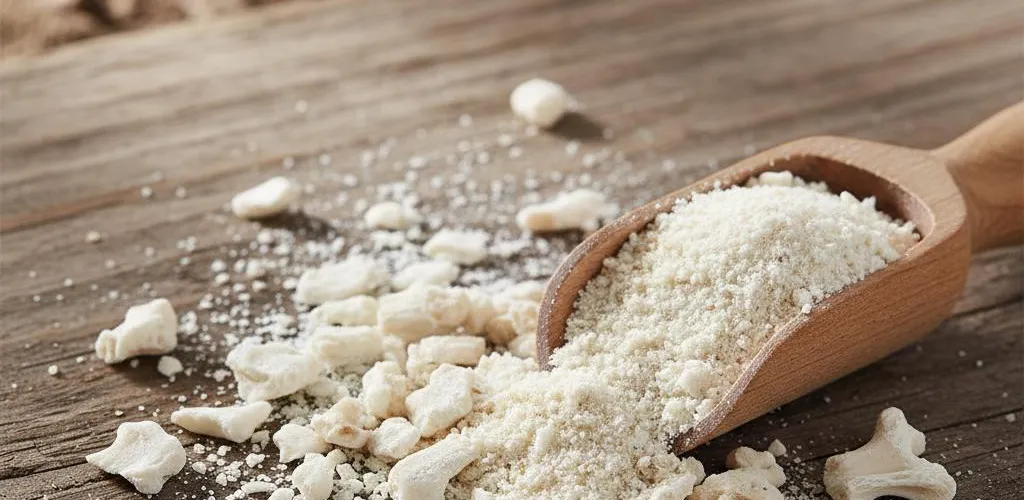
Fish meal is the dried, ground tissue of whole fish or fish processing byproducts — a concentrated protein source that delivers nitrogen faster than most other organic amendments. When soil microbes encounter fish meal’s amino acid-rich protein, they metabolize it aggressively, releasing plant-available nitrogen within days rather than the weeks or months required by feather meal or bone meal.
Fish meal is produced by cooking whole fish or fish waste (heads, tails, viscera) at processing plants, pressing out the oils, and drying the remaining protein-rich solid to 8-10% moisture content. The dried material is ground to a meal consistency with a typical analysis of 10-4-0 NPK. Major production regions include the Pacific Northwest (salmon, pollock), Peru (anchovy), and Scandinavia (herring).
Organic growers use fish meal because its protein structure is readily accessible to soil bacteria — the amino acids in fish tissue are similar to those already present in soil organic matter, so existing bacterial populations begin mineralization immediately. This “fast nitrogen” characteristic makes fish meal the sprint runner in a fertilizer blend, while feather meal and soybean meal handle the sustained release over months.
Fish meal’s 10-4-0 NPK analysis delivers nitrogen primarily as protein-bound amino acids, with secondary contributions of phosphorus from residual bone fragments and trace minerals (selenium, iodine, zinc) accumulated through the marine food chain. The amino acid profile includes all essential amino acids — making fish meal not just a nitrogen source but a complete protein input for soil biology.
The nitrogen mineralization rate of fish meal in warm soil (65-80°F) is 60-80% within the first 30 days — significantly faster than blood meal (40-60% in 30 days), feather meal (20-30% in 30 days), or alfalfa meal (30-40% in 30 days). This rapid conversion fuels the initial burst of microbial activity that activates slower amendments in the blend.
Fish meal is the soft tissue (protein, fat, amino acids) — it delivers nitrogen. Fish bone meal is the skeletal material (hydroxyapatite) — it delivers phosphorus and calcium. Daley Organics includes both in the 25-ingredient fertilizer blend because they serve completely different nutritional functions despite originating from the same fishery processing stream.
Fish meal is a component of the nitrogen fraction in our 25-ingredient fertilizer blend, appearing in Daley’s Mix ($140/yd), Premium Soil Mix ($130/yd), and Grow Blend 5-4-2. It provides the “first wave” of nitrogen that activates soil biology within days of planting, while blood meal, feather meal, and soybean meal provide the second, third, and fourth waves over the following 4-6 months.
The amino acid content of fish meal also functions as a microbial stimulant — soil bacteria and fungi use amino acids as both an energy source and a building block for their own cellular machinery, accelerating the decomposition of every other organic amendment in the blend.
For soil preparation, incorporate 3-5 lbs per 100 square feet into the top 6-8 inches. For side-dressing actively growing crops, apply 1-2 lbs per 100 square feet every 3-4 weeks during peak growth. For compost activation, add 1 lb per cubic yard of carbon-heavy compost to accelerate decomposition.
Fish meal does attract animals — dogs, raccoons, and rodents are drawn to the protein scent. Always incorporate fish meal into the soil rather than leaving it on the surface. A 1-2 inch mulch layer over freshly amended beds masks the scent within 24-48 hours.
Common Questions
Fish meal typically analyzes at 10-4-0 NPK, delivering nitrogen primarily as protein-bound amino acids. The phosphorus contribution comes from residual bone fragments in the processed meal.
Fish meal mineralizes 60-80% of its nitrogen within the first 30 days in warm soil (65-80°F) — significantly faster than blood meal (40-60%), feather meal (20-30%), or alfalfa meal (30-40%). This makes it the fastest organic nitrogen source in Daley Organics blends.
Fish meal is soft tissue (protein, amino acids) that delivers nitrogen at 10-4-0 NPK. Fish bone meal is skeletal material (hydroxyapatite) that delivers phosphorus and calcium at 4-12-0. Daley Organics uses both for different nutritional functions.
Yes. Fish meal's protein scent attracts dogs, raccoons, and rodents. Always incorporate it into the soil rather than surface-applying. A 1-2 inch mulch layer over freshly amended beds masks the scent within 24-48 hours.
Want the full science behind every ingredient?
Our ingredient library covers all 26 amendments with full descriptions and product cross-references.